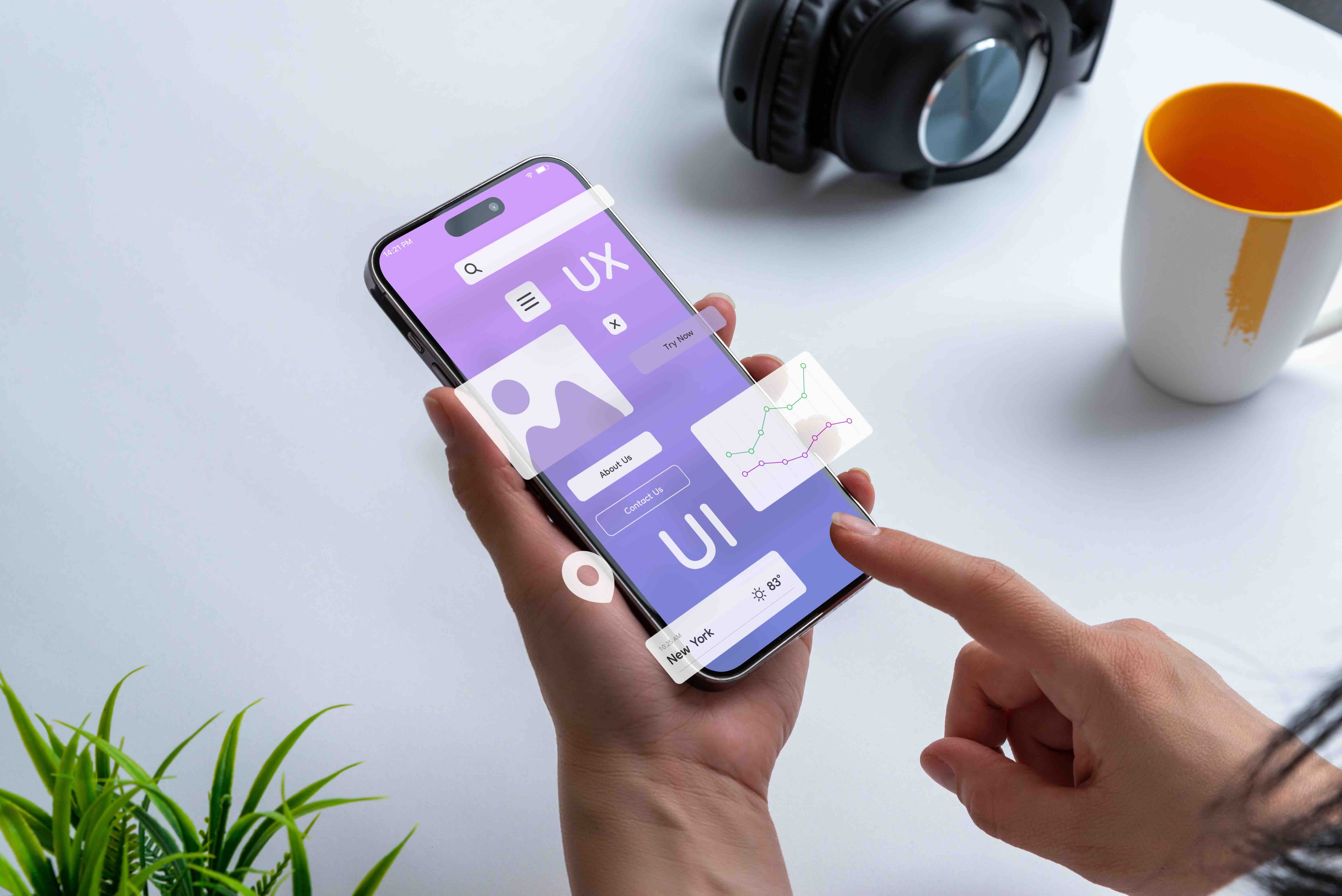
UX vs UI Design: What Every B2B Brand Needs to Understand Before Building Anything
Here is something that comes up constantly in client conversations at creative and marketing agencies: someone uses UX and UI interchangeably, and then the entire project scope gets built on a shaky foundation. It is an honest mistake. The two terms sound related, they live in the same neighborhood, and most people assume they mean the same thing. They do not. Understanding the distinction between user experience design and user interface design is not just an academic exercise. For B2B companies investing in websites, digital products, or branded platforms, getting this right from the start is the difference between a conversion engine and a beautiful dead end. Let us break it down properly.
Defining UX Design: The Architecture of Experience
User experience design, commonly abbreviated as UX, is the strategic and structural discipline that governs how a person feels when they interact with a product or platform. It is less about what something looks like and more about how it works, how it flows, and whether it actually solves the problem a user showed up with. UX designers spend their time conducting user research, building wireframes, mapping user journeys, and validating assumptions through usability testing. They are asking questions like: Does this navigation make sense? Can a first-time visitor accomplish their goal in under three clicks? Where are users dropping off, and why? In a B2B context, UX design is especially critical because the buying journey is long, the decision-makers are sophisticated, and the tolerance for friction is essentially zero. A clunky product demo flow or a confusing pricing page does not just frustrate users. It costs companies deals.
Defining UI Design: The Visual Language of a Product
User interface design is what most people are picturing when they talk about design in a general sense. It is the visual and interactive layer of a digital product. Colors, typography, button states, iconography, spacing, micro-animations, component libraries, and the overall aesthetic system that makes a product feel cohesive and on-brand. UI designers work from wireframes and UX specifications to build the actual interface that users see and touch. They are responsible for making sure a call-to-action button is visually prominent enough to notice, that the brand's color palette is applied consistently across every screen, and that interactive states like hover effects or form validation messages are clear and intuitive. Good UI design communicates trust instantly. In a B2B environment, where credibility and professionalism carry enormous weight in the sales process, the visual quality of a digital product is a direct signal of brand authority.
How UX and UI Work Together in Practice
Think of UX as the blueprint and UI as the finish work. A well-designed building needs both a solid structural plan and thoughtful interior design. When UX and UI are developed in alignment, the result is a product that is both logical and beautiful. When they are misaligned, or when one discipline is treated as optional, the cracks show up fast. A product with strong UX but weak UI might be highly functional but fail to convert because it looks unpolished and untrustworthy. A product with stunning UI but poor UX might attract initial attention but ultimately frustrate users because nothing is where they expect it to be. The professional workflow typically moves from discovery and research, into information architecture and wireframing handled by UX, then transitions into visual design and component development handled by UI, before moving into testing, iteration, and launch. Both disciplines inform each other throughout the process.
Key Advantages of Investing in Both Disciplines Properly
When agencies and in-house teams treat UX and UI as complementary and equally important, the business outcomes are measurable. Companies that prioritize structured UX research before design execution tend to see fewer post-launch revisions, lower customer support loads related to usability confusion, and higher task completion rates across digital touchpoints. Meanwhile, strong UI execution builds brand equity, increases perceived credibility, and directly influences conversion rates. In 2026, the bar for digital experience quality has risen sharply across all industries. B2B buyers are consumers outside of work hours. They interact with world-class digital products daily, and they carry those expectations into every vendor evaluation they perform. A dated or inconsistent interface signals operational immaturity, regardless of how strong the actual service or product is.
The core advantages of a properly integrated UX and UI process include:
- Higher conversion rates driven by intuitive user flows and clear visual hierarchy
- Reduced development costs from catching structural problems in wireframes rather than in production code
- Stronger brand trust established through visual consistency and design system discipline
- Lower user drop-off rates resulting from friction reduction across critical touchpoints
- Better accessibility compliance through inclusive design practices baked into both the experience and interface layers
- Faster cross-functional alignment because wireframes and UI mockups serve as shared artifacts for product, marketing, and engineering teams
Common Drawbacks and Pitfalls to Watch For
Even organizations that understand the distinction between UX and UI can stumble during execution. One of the most common pitfalls is compressing the UX phase to save time or budget, then handing off incomplete wireframes to UI designers. The downstream effect is usually a UI layer built on assumptions rather than validated user behavior, which leads to redesigns, scope creep, and missed launch targets. Another frequent issue is treating UX research as a one-time event rather than an ongoing discipline. User behavior changes. Products evolve. What worked at launch may underperform twelve months later. Agencies that build in continuous discovery loops and usability review cycles tend to outperform those that treat the design process as a closed project rather than a living system. There is also the question of tooling and handoff quality. Poor documentation between UX and UI phases, or between design and development, is a silent project killer that rarely gets diagnosed correctly.
UX vs UI Roles: Who Does What on a Creative Agency Team
In a full-service marketing and creative agency context, these roles are often staffed separately, though smaller teams may see some overlap in responsibilities. A UX designer or strategist typically owns research methodologies like heuristic evaluation, competitive benchmarking, persona development, journey mapping, and prototype testing. A UI designer, sometimes called a visual designer or product designer depending on the organization, owns the design system, component library, visual language, and high-fidelity mockup production. In agencies that work on Webflow, Shopify, or other no-code and low-code platforms, UI designers often carry a development component as well, translating their designs directly into live environments. Understanding who is responsible for what prevents the common failure mode of a single designer being asked to perform both disciplines simultaneously without the time or structure to do either well.
Practical Tips for B2B Companies Evaluating UX and UI Partners
When vetting a creative or digital agency for UX and UI work, the questions you ask during discovery will reveal a great deal about how they operate. Agencies that lead with visual portfolios before asking about your users or business goals are showing you where their priority sits. That is not necessarily wrong, but it tells you something. Here are the signals worth evaluating:
- Does the agency have a documented UX research and discovery process, or do they move straight to design?
- Can they demonstrate examples where UX research changed the design direction and improved measurable outcomes?
- Do they maintain living design systems or deliver one-off files that become outdated immediately?
- How do they define success, and is it tied to user behavior metrics or subjective visual approval?
- What is their handoff process between design and development, and how is design integrity maintained in production?
Why UX and UI Investment Directly Impacts Revenue
This is the conversation that tends to land hardest with B2B leadership teams. UX and UI are not line items to be managed down. They are revenue infrastructure. A website with high traffic and low conversion is not a traffic problem. It is a design problem. A SaaS platform with high churn and recurring support tickets is not a customer success problem. It is a usability problem. When the experience layer is treated as a business investment rather than a creative expense, the return becomes traceable. Agencies that connect design decisions to conversion rate optimization, session depth, funnel velocity, and customer lifetime value are operating at the intersection of creativity and performance. That is where the meaningful business outcomes live. In 2026, companies that have already aligned their UX and UI disciplines with revenue objectives are pulling ahead of competitors still treating their websites as digital brochures.
Why Kreativa Group Is the Right Partner for UX and UI Design
If you are ready to close the gap between how your brand looks and how it performs, Kreativa Group is worth a serious conversation. Based in Los Angeles and Miami, Kreativa Group brings an unusually rare combination of creative and performance expertise to every engagement. Their leadership team has designed digital experiences for globally recognized brands including Sandals Resorts, Porsche, Audi, BMW, and major ad agencies like Young and Rubicam. They have also operated at the startup level, with successful exits from ventures like Misfit Wearables and HomeLister, which means they understand how to build lean, effective design systems that scale. To date, Kreativa Group has driven over 200 million dollars in incremental revenue, maintains an average of over 7x ROAS and a 4% conversion rate, and has launched more than two dozen websites across Webflow, Shopify, and WordPress platforms. They are among the top 1% of US-based agencies certified across Google Ads, Amazon Ads, Shopify, and Webflow. What sets them apart is a consistent focus on business outcomes over vanity metrics. If you want to understand exactly where your digital experience is leaking revenue, start with a free growth audit from Kreativa Group. Or, if you want to learn more about their full scope of creative and marketing capabilities, visit the Kreativa Group website to see how they approach design as a growth discipline.
Frequently Asked Questions About UX vs UI Design
What is the main difference between UX and UI design?
UX design focuses on the overall structure, flow, and functionality of a digital product, specifically how easy and logical it is for users to accomplish their goals. UI design focuses on the visual and interactive elements users see and engage with, including colors, typography, buttons, and layout. Both disciplines are essential, but they address different layers of the user experience.
Can one designer handle both UX and UI responsibilities?
It is possible, particularly in smaller agencies or early-stage product teams, but it requires careful time management and a clear separation of tasks. When both disciplines are compressed into a single role without adequate time for each phase, the quality of both the experience architecture and the visual execution tends to suffer. For complex B2B platforms or high-traffic websites, dedicated specialists in each discipline typically produce stronger outcomes.
Why does UX research matter before UI design begins?
UX research validates assumptions about user behavior before any visual design decisions are made. Without it, UI designers are building on guesswork, which leads to interfaces that look polished but fail to guide users through the intended journey. Research-informed wireframes give UI designers a structurally sound foundation to work from, reducing costly revisions later in the process.
How does poor UX or UI design affect B2B conversion rates?
Poor UX creates friction that causes users to abandon key actions like completing a form, booking a demo, or navigating to a pricing page. Poor UI erodes trust through visual inconsistency or a lack of professional polish, signaling to potential buyers that the brand may not be reliable. Either issue independently can suppress conversion rates, and both together can render an otherwise strong offer nearly invisible to the market.
What is a design system and why does it matter?
A design system is a centralized library of reusable UI components, typography standards, color palettes, spacing rules, and interaction patterns that ensure visual consistency across a digital product. It matters because it reduces design and development time, maintains brand integrity at scale, and allows teams to build new features or pages without recreating foundational elements from scratch each time.
How do UX and UI design connect to SEO performance?
UX design directly influences SEO signals like page engagement time, bounce rate, and crawlability through logical site architecture and fast-loading page structures. UI design contributes through visual clarity that keeps users engaged and scrolling, which further improves behavioral engagement signals. Search engines in 2026 weight user experience signals heavily in their ranking algorithms, making good UX and UI design a de facto component of a sound SEO strategy.
What should a B2B company look for in a UX and UI design agency?
Look for an agency that begins with discovery and user research before moving into visual design. Evaluate whether they can articulate how their design decisions connect to measurable business outcomes. Review their case studies for evidence of post-launch performance improvements. Prioritize partners who maintain design systems and offer structured handoff documentation to development teams.
How long does a proper UX and UI design process take?
The timeline varies based on project scope, but a thorough UX research and wireframing phase for a mid-complexity B2B website typically takes three to six weeks. UI design and high-fidelity mockup production adds another three to five weeks, depending on the number of page templates and component complexity. Rushing either phase to compress the timeline is one of the most common drivers of post-launch redesign costs.
Is Webflow a good platform for implementing UX and UI design?
Webflow is an excellent platform for translating high-quality UI design into production-ready websites because it allows designers to build directly in the browser with full visual control, without sacrificing clean, semantic code output. It supports design system thinking through global styles and reusable components, and it integrates well with modern UX workflows. For B2B companies that need marketing agility alongside design quality, Webflow is one of the strongest platform choices available.
How do I know if my current website has UX or UI problems?
Common indicators of UX problems include high bounce rates on key pages, low form completion rates, short average session durations, and recurring user support requests about navigation or functionality. UI problems often manifest as low brand recall, inconsistent visual presentation across devices, or qualitative feedback from users describing the site as feeling outdated or untrustworthy. A structured usability audit or heuristic evaluation conducted by an experienced agency can identify and prioritize the specific issues affecting your performance.