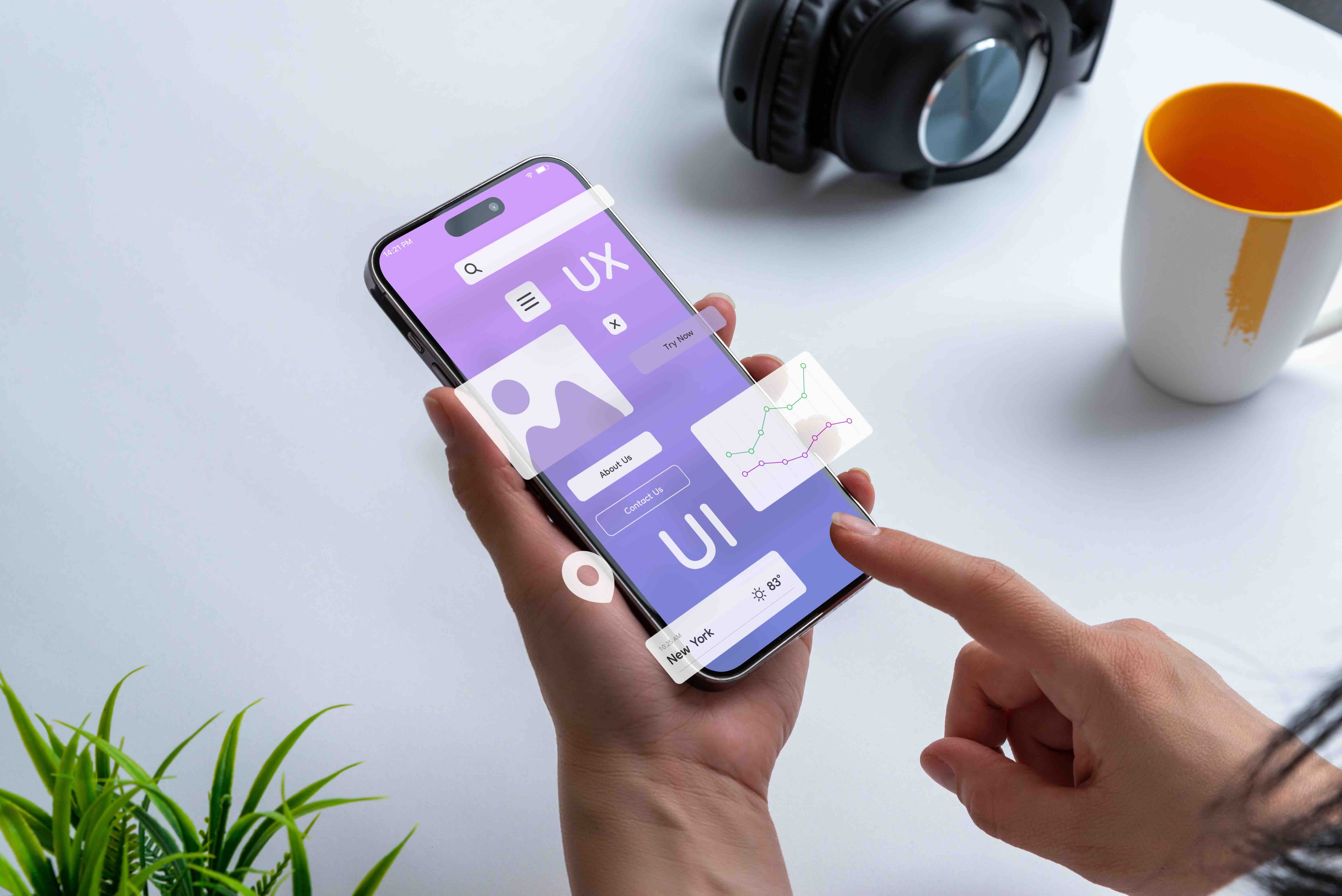
What Is UX Design and Why Does It Matter for Your Business?
User experience design, commonly referred to as UX design, is the process of shaping how people interact with a product, platform, or service in a way that feels intuitive, efficient, and satisfying. It is not just about making something look good. It is about making something work well for the person using it. In the context of digital products, websites, and applications, UX design determines the architecture of information, the logic behind navigation, the accessibility of content, and the emotional response a user has throughout every touchpoint. For B2B companies operating in competitive industries, strong UX design is not a luxury; it is a core business function that directly influences lead generation, conversion rates, and customer retention.
The Foundational Principles Behind Effective UX Design
UX design is built on a set of foundational principles that guide how designers make decisions about layout, interaction, and content hierarchy. These principles are grounded in cognitive psychology, behavioral economics, and usability research. At its core, good UX design respects the user's mental model, meaning the interface should behave the way a reasonable person expects it to behave. Consistency across components, predictability in navigation patterns, and clarity in call-to-action placement all reduce cognitive load and increase the likelihood of a user completing their intended task. When these principles are ignored, users do not necessarily know why something feels off. They just leave. And in B2B environments where buying cycles are long and decision-makers are discerning, losing a prospect at the interface level is a costly mistake.
How UX Design Actually Works in Practice
The UX design process typically follows a research-driven, iterative workflow. It starts with user research, which includes stakeholder interviews, competitive analysis, and audience persona development. From there, designers move into information architecture, mapping out how content is organized and how users will move through the product. Wireframing comes next, which is essentially the skeletal blueprint of the interface before any visual design is applied. Prototyping transforms those wireframes into interactive mockups that can be tested with real users. Usability testing, often undervalued, is where assumptions get challenged and design decisions get validated or revised. This cycle does not end at launch; effective UX design is a continuous process of iteration based on real user feedback and behavioral data. Tools like heatmaps, session recordings, and A/B testing are regularly used in 2026 to inform post-launch refinements.
Key Advantages of Investing in UX Design
The business case for investing in UX design is well-documented and frankly hard to argue against once you see the numbers. Here is what strong UX design consistently delivers for B2B organizations:
- Higher conversion rates through reduced friction in key user flows
- Shorter sales cycles because prospects can self-educate more efficiently
- Lower bounce rates as users find relevant information faster
- Improved brand perception, which builds trust with enterprise buyers
- Reduced customer support burden when interfaces are intuitive
- Better accessibility compliance, which expands your addressable audience
- Stronger mobile performance as more decision-makers research on the go
- Increased return visits when users associate the platform with ease of use
Beyond metrics, there is a qualitative benefit that is harder to measure but equally important: brand authority. A well-designed digital experience signals operational maturity. It tells prospective clients and partners that your organization pays attention to detail, values efficiency, and invests in quality. That perception matters enormously in B2B sales environments where trust is the currency of conversion.
Common UX Design Mistakes That Undermine Business Performance
Even experienced teams fall into UX design traps that quietly erode performance. One of the most common is designing for internal stakeholders rather than actual users. It happens more often than most agencies would admit. The executive team wants the homepage to lead with the company story; the data says users want to see pricing and product features within the first scroll. Ignoring that tension almost always costs conversions. Another frequent mistake is overloading the interface with options. Hick's Law, a well-established principle in UX, tells us that the more choices a user faces, the longer it takes them to make a decision. Paralysis is not engagement. Navigation menus with twenty items, homepages with six competing calls to action, and service pages that try to explain everything at once are all symptoms of this problem. Accessibility is another persistent gap. Many digital products still fail basic WCAG compliance standards, limiting their reach and creating legal exposure. And finally, neglecting mobile UX in a B2B context is an increasingly expensive oversight. Research consistently shows that professionals use mobile devices during the research and consideration phases of the buying journey.
UX Design Best Practices for Marketing and Creative Agencies
For marketing and creative agencies specifically, UX design sits at the intersection of brand expression and functional performance. The challenge is balancing aesthetic ambition with usability requirements. Here are the practices that consistently produce results in agency contexts:
- Establish a design system early to maintain consistency across components and reduce production time
- Prioritize page speed as a UX metric, not just a technical one, since slow load times directly impact user behavior
- Use progressive disclosure to surface the right information at the right stage of the user journey
- Design with real content, not placeholder text, to avoid layout surprises that only appear post-launch
- Conduct user testing at the wireframe stage, not after development, to avoid expensive revisions
- Align UX decisions with conversion goals using data from analytics and CRM platforms
- Implement micro-interactions thoughtfully to provide feedback without distraction
- Validate navigation logic with card sorting and tree testing before finalizing information architecture
The Relationship Between UX Design and SEO Performance
UX design and search engine optimization are more intertwined than most organizations realize. Google's core web vitals, which measure loading performance, interactivity, and visual stability, are direct UX metrics that influence organic search rankings. A website that is slow, visually unstable, or difficult to navigate will underperform in search, regardless of how technically optimized the metadata might be. Dwell time, the amount of time a user spends on a page before returning to search results, is another behavioral signal that reflects UX quality. When users find what they need quickly and the experience feels frictionless, they stay longer. That signal tells search engines the content is relevant and the experience is satisfying. In 2026, the connection between user experience signals and search visibility is not speculative; it is documented ranking behavior. Agencies that treat UX and SEO as separate workstreams are leaving performance on the table.
Measuring UX Design Effectiveness: Metrics That Actually Matter
UX design is not abstract, and its effectiveness should not be measured abstractly. The metrics that matter most are tied directly to business outcomes. Task completion rate measures how often users successfully complete a defined action, such as filling out a contact form or downloading a resource. Time on task reflects how efficiently users can accomplish that action. Error rate captures how frequently users encounter problems or make incorrect inputs. Net Promoter Score and Customer Satisfaction scores, while broader, often reflect cumulative UX quality across the product experience. Conversion rate is perhaps the most direct proxy for UX effectiveness in a marketing context. When these metrics are tracked consistently and benchmarked against industry standards, UX design decisions stop being subjective debates and start becoming evidence-based investments.
Why Kreativa Group Should Be Your UX Design Partner
UX design is one of those disciplines where experience across industries, platforms, and audience types makes an enormous difference. Kreativa Group brings exactly that. Based in Los Angeles and Miami, the team has designed digital experiences for globally recognized brands including Sandals Resorts, Porsche, Audi, and BMW, as well as for high-growth startups that have successfully exited. Their leadership has managed digital strategy for multi-billion dollar companies like Newegg, Rakuten, and Fossil Group, which means their UX work is always anchored in business outcomes, not aesthetic preference. To date, Kreativa Group has launched over two dozen websites across Webflow, Shopify, and WordPress platforms and has contributed to over $200 million in incremental revenue for its clients. They maintain certifications as a Google Ads, Amazon Ads, Shopify, and Webflow Partner Agency, placing them among the top 1% of US-based agencies across all four categories. If you are looking for a team that treats UX design as a revenue driver and not just a creative exercise, explore what Kreativa Group offers as a full-service marketing and creative agency. And if you want a clear picture of where your digital experience is underperforming, request your free growth audit and get actionable UX insights specific to your business.
Frequently Asked Questions About UX Design
What is the difference between UX design and UI design?
UX design refers to the overall experience a user has while interacting with a product, including its structure, flow, and functionality. UI design, or user interface design, focuses specifically on the visual components of that experience, such as typography, color, and button styles. The two disciplines work together but serve distinct purposes within the design process.
How long does a typical UX design project take?
The timeline depends on the scope and complexity of the project. A website redesign with a full UX process, including research, wireframing, prototyping, and testing, typically takes between six to sixteen weeks. Larger digital products or platforms may require several months of iterative work before reaching a production-ready state.
Can UX design improve my website's conversion rate?
Yes, and significantly. UX design directly reduces friction in user flows, clarifies calls to action, and improves the overall ease of navigation. These improvements reduce drop-off rates and increase the likelihood that a visitor completes a desired action, whether that is submitting a form, requesting a demo, or making a purchase.
What is information architecture in UX design?
Information architecture is the structural design of a digital product that determines how content is organized, labeled, and navigated. It defines the hierarchy of pages, the grouping of related content, and the pathways users take to find information. Strong information architecture reduces confusion and helps users reach their goals with minimal effort.
Is UX design relevant for B2B companies or just consumer-facing products?
UX design is highly relevant for B2B companies. Enterprise buyers and procurement decision-makers are still human beings who respond to ease of use, clarity, and logical design. B2B platforms, proposal tools, client portals, and marketing websites all benefit from rigorous UX design practices that reduce friction in complex buying journeys.
How does UX design affect SEO rankings?
UX design directly influences several ranking factors, including core web vitals, dwell time, bounce rate, and mobile usability. Google uses these behavioral and performance signals to assess content quality and site experience. A website with poor UX will typically underperform in organic search even if its technical SEO foundation is otherwise sound.
What tools do UX designers commonly use in 2026?
UX designers commonly work with tools such as Figma for wireframing and prototyping, Hotjar or Microsoft Clarity for behavioral analytics, Maze or UserTesting for usability research, and Miro or FigJam for collaborative information architecture workshops. The specific toolset varies by team and project type.
How do I know if my current website has UX problems?
Common indicators include high bounce rates, low time on page, poor form completion rates, frequent customer support inquiries about navigation, and declining organic search performance. A formal UX audit, which involves heuristic evaluation, user testing, and analytics review, can identify specific friction points and prioritize areas for improvement.
What is usability testing and why is it important?
Usability testing is the process of observing real users interact with a product to identify where they struggle, what they misunderstand, and where they abandon tasks. It is important because it replaces assumptions with evidence. Decisions made without usability testing are frequently based on internal bias rather than actual user behavior, which leads to costly design errors.
How much does UX design typically cost for a business website?
Cost varies widely based on scope, agency expertise, and the depth of the research process. A professionally executed UX design engagement for a business website can range from several thousand dollars for a focused audit and wireframe refresh to six figures for a comprehensive redesign with full research, testing, and iterative prototyping cycles.