What Is Usability Testing and Why It Should Be Central to Your Digital Strategy
Usability testing is one of those terms that gets thrown around in agency meetings and design sprints without always getting the attention it deserves. At its core, usability testing is the practice of evaluating a digital product, whether that is a website, a web application, or a landing page, by observing real users as they attempt to complete specific tasks within that product. It is not about guessing what users want. It is about watching what they actually do, noting where they hesitate, where they get confused, and where they drop off entirely. For B2B companies investing in digital experiences, this is not a nice-to-have. It is a foundational component of building something that converts.
The Basics: How Usability Testing Actually Works
The process typically begins with defining clear research objectives. Before anyone sits down in front of a prototype or live site, the design team needs to know what questions they are trying to answer. Are users finding the primary call to action? Are they able to navigate the service pages without getting lost? Once those objectives are established, the team recruits participants who match the target audience profile, which in a B2B context often means decision-makers, procurement leads, or department heads rather than general consumers. Sessions are moderated or unmoderated, depending on budget and timeline. Moderated sessions involve a facilitator guiding participants through tasks in real time, while unmoderated sessions are conducted asynchronously using specialized platforms. Both generate qualitative and quantitative data that informs the next iteration of the design.
Moderated vs. Unmoderated: Knowing the Difference Matters
Choosing between moderated and unmoderated testing is not just a budget decision, though cost does factor in. Moderated usability testing gives researchers the ability to ask follow-up questions, probe into user behavior in real time, and capture nuanced reactions that a recording alone might miss. It is slower and more resource-intensive, but the depth of insight is considerably higher. Unmoderated testing, on the other hand, scales efficiently. You can run dozens of sessions simultaneously, collect task completion rates, time-on-task metrics, and error rates across a larger sample, and analyze results through session recordings and automated reporting tools. For agencies working with clients who have complex B2B platforms, a hybrid approach often yields the most actionable findings.
The Key Advantages of Integrating Usability Testing Into Your UX Process
The business case for usability testing is straightforward once you understand what it prevents. A poorly designed interface costs money, not just in lost conversions but in customer support volume, user churn, and brand perception. When usability testing is embedded into the design process early and often, teams catch friction points before they reach production. The advantages compound over time. First, design decisions become evidence-based rather than assumption-based, which reduces internal disagreements and accelerates stakeholder alignment. Second, conversion rates improve because the user journey is optimized based on observed behavior rather than theoretical personas. Third, accessibility gaps are often identified during usability sessions, giving teams an opportunity to address compliance issues before launch. And fourth, user satisfaction scores, measured through tools like the System Usability Scale or the Net Promoter Score, tend to improve meaningfully after iterative usability work.
Common Drawbacks and Limitations You Should Know About
Usability testing is not without its challenges. Recruiting the right participants is consistently cited as one of the hardest parts of the process, particularly in B2B contexts where your target user might be a CFO or an IT director with a packed calendar. Sample sizes in usability research are typically small, which means findings are directional rather than statistically definitive. A session with five to eight participants can surface the majority of critical usability issues, but it will not give you the same confidence level as a large-scale quantitative study. There is also the matter of observer bias. Moderators who are too close to the product can inadvertently lead participants toward desired behaviors, contaminating the data. And finally, usability testing takes time. In fast-moving agency environments, it can feel like a luxury when deadlines are tight. The key is building it into the project timeline from the start rather than treating it as an afterthought.
Where Usability Testing Fits in the Broader UX Design Process
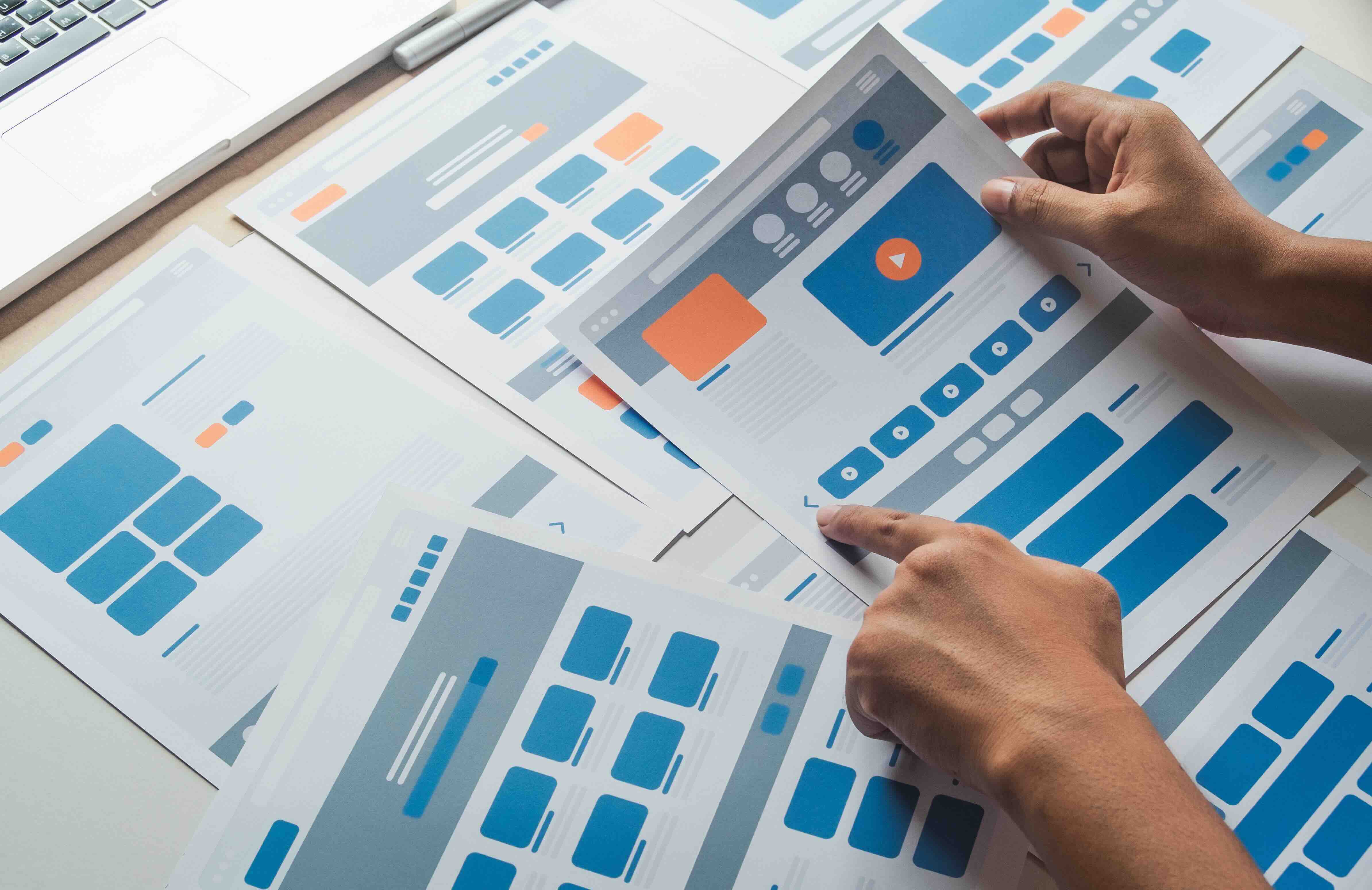
Usability testing does not live in isolation. It is one piece of a larger user experience design process that typically includes discovery research, information architecture, wireframing, prototyping, visual design, and post-launch analytics. Testing can and should happen at multiple stages. Early-stage prototype testing helps validate structural decisions before significant development resources are committed. Mid-production testing identifies issues in interactive flows before they become expensive to fix. And post-launch testing, often conducted alongside tools like heatmaps and session recordings, ensures that the live product continues to meet user needs as traffic patterns and use cases evolve. The agencies that do this well treat usability testing as a continuous practice, not a one-time checkbox.
Practical Tips for Running More Effective Usability Tests
If you are planning to bring usability testing into your next project or want to sharpen the effectiveness of your current approach, a few principles consistently produce better results.
- Write task scenarios that reflect real user goals, not internal feature descriptions
- Recruit participants who match your actual buyer profile, not just people who are easy to find
- Limit each session to five to seven core tasks to avoid participant fatigue
- Use think-aloud protocol to capture verbal reasoning alongside observed behavior
- Record every session with participant consent and analyze recordings as a team, not in isolation
- Prioritize findings by severity and frequency before presenting to stakeholders
- Close the loop by retesting after design revisions to confirm that changes resolved the identified issues
Usability Testing in 2026: What Has Changed and What Still Holds True
The tools have evolved considerably. AI-assisted analysis platforms can now transcribe sessions, tag behavioral patterns, and surface themes across dozens of recordings in a fraction of the time it used to take manually. Eye-tracking technology has become more accessible, and remote testing infrastructure has matured significantly since the early days of video call workarounds. What has not changed is the fundamental value of watching a real person use your product and letting that observation guide your decisions. In 2026, the agencies and in-house teams that are winning in digital are the ones that have normalized usability testing as a standard practice rather than a premium add-on. The data is clear: companies that invest in user research outperform those that skip it in both conversion efficiency and long-term user retention.
Why Kreativa Group Is the Right Partner for UX-Driven Digital Growth
If you are a B2B brand serious about building digital experiences that actually perform, the methodology behind your agency partnership matters as much as the creative output. Kreativa Group is a marketing and creative agency headquartered in Los Angeles and Miami, with a leadership team that has designed and launched digital products for global brands including Sandals Resorts, Porsche, Audi, BMW, and agencies like Young and Rubicam. That same team has driven over 200 million dollars in incremental revenue, maintained an average return on ad spend of over 7x, and launched more than two dozen websites across Webflow, Shopify, and WordPress. Kreativa Group is among the top 1% of US-based agencies holding simultaneous certifications as a Google Ads Partner, Amazon Ads Partner, Shopify Partner, and Webflow Partner Agency. What sets the team apart is an unwavering focus on business outcomes rather than vanity metrics. If you are ready to understand what is actually blocking your digital growth, visit Kreativa Group's full-service marketing and UX agency website or claim your free digital growth audit to identify your highest-impact UX and conversion opportunities.
Frequently Asked Questions About Usability Testing
What is usability testing in UX design?
Usability testing is a research method in which real users are observed completing tasks on a digital product such as a website or application. The goal is to identify friction points, navigation issues, and design failures that negatively affect the user experience and ultimately reduce conversion rates.
How many participants do you need for a usability test?
Research consistently shows that five to eight participants can surface approximately 85 percent of the most critical usability issues in a given interface. Larger sample sizes are appropriate for quantitative studies, but for qualitative usability testing, smaller groups tested iteratively across multiple rounds tend to produce the most actionable insights.
What is the difference between moderated and unmoderated usability testing?
Moderated testing involves a live facilitator who guides participants through tasks and asks follow-up questions in real time, providing deeper qualitative insight. Unmoderated testing is conducted asynchronously through a platform where participants complete tasks independently, making it faster and more scalable but less nuanced in its findings.
When should usability testing happen in a project?
Usability testing is most effective when conducted at multiple stages: during early prototype development to validate structure, during mid-production to catch interactive flow issues, and after launch to monitor real-world user behavior. Treating it as a continuous process rather than a single event produces the strongest results.
How is usability testing different from A/B testing?
Usability testing is qualitative and observational, focused on understanding why users behave the way they do. A/B testing is quantitative and comparative, measuring which version of a design performs better statistically. They answer different questions and are most powerful when used together within a broader optimization strategy.
What metrics are typically measured in usability testing?
Common metrics include task completion rate, time on task, error rate, and user satisfaction scores measured through standardized instruments like the System Usability Scale. These metrics help teams quantify the severity of usability issues and track improvement across testing iterations.
Can usability testing improve B2B website conversion rates?
Yes, significantly. B2B websites often suffer from complex navigation, unclear value propositions, and friction-heavy lead capture forms. Usability testing directly identifies these issues so that design teams can resolve them before they continue to suppress qualified lead generation and pipeline volume.
How much does usability testing typically cost?
Costs vary widely depending on whether testing is moderated or unmoderated, the platform used, participant recruitment fees, and the scope of analysis. Unmoderated testing using self-serve platforms can be relatively affordable, while moderated sessions with specialized B2B participants and full analysis reporting represent a higher but often justified investment.
What tools are commonly used for remote usability testing?
Popular platforms for remote usability testing include UserTesting, Maze, Lookback, and Optimal Workshop, among others. Many of these platforms offer session recording, task flow analysis, and participant recruitment capabilities. The right tool depends on the testing methodology, participant profile, and the level of analysis required.
Is usability testing only for websites and apps?
No. While websites and applications are the most common subjects, usability testing principles apply to any interactive digital product including email marketing flows, onboarding sequences, digital advertising landing pages, and SaaS platform interfaces. Anywhere a user is expected to complete a task, usability testing can surface valuable improvement opportunities.