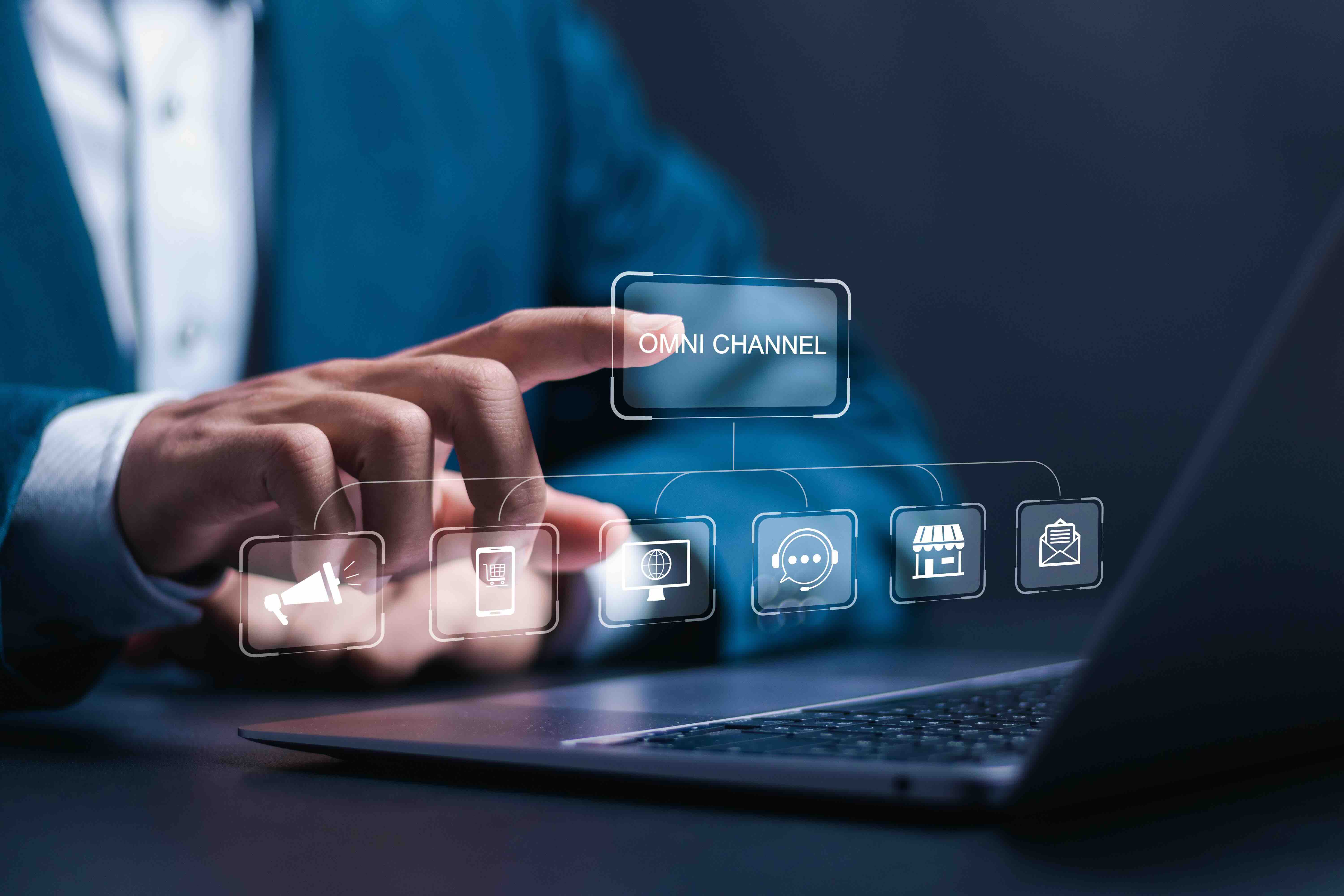
What Is Omnichannel Marketing and Why Does It Matter for B2B Agencies?
If you have ever watched a potential client interact with your agency across five different touchpoints before booking a discovery call, you already understand omnichannel marketing on an intuitive level. The formal definition is a bit more structured: omnichannel marketing is a customer-centric strategy that delivers a seamless, integrated brand experience across every channel, platform, and device a prospect or client might use. That includes your website, paid media, email sequences, social channels, sales calls, trade publications, and even offline touchpoints like events or printed materials. The key distinction between omnichannel and multichannel is cohesion. Multichannel means you are present on several platforms. Omnichannel means those platforms actually talk to each other, share data, and work together to move someone through a unified customer journey. For marketing and creative agencies specifically, this is not just a nice-to-have. In 2026, it is becoming a standard expectation from B2B buyers who are increasingly sophisticated and channel-agnostic.
How Omnichannel Marketing Actually Works in Practice
The mechanics behind an effective omnichannel marketing strategy depend heavily on data infrastructure, channel orchestration, and message consistency. At the foundation, you need a centralized system, typically a CRM or a customer data platform, that aggregates behavioral data across every touchpoint. When a prospect visits your agency's services page, downloads a case study, and then clicks a retargeting ad on LinkedIn before finally replying to a follow-up email, each of those interactions should be tracked, connected, and used to inform the next step in the sequence. The experience should feel eerily personalized, not because you are reading their mind, but because you have built a system that actually listens. Channel orchestration is where most agencies stumble. The paid media team is running one message, the email team is running another, and the social team is doing something entirely different. An omnichannel approach requires those teams, or in the case of smaller agencies, those functions, to operate from a shared playbook. Creative assets, messaging hierarchies, tone, and timing all need to align across the board. This kind of cross-functional coordination is genuinely difficult, but it is also exactly what separates high-performing agencies from average ones.
The Role of Data and Technology in Omnichannel Execution
Omnichannel marketing is, at its core, a technology-enabled strategy. Without the right stack, the vision falls apart pretty quickly. The tools that tend to anchor a solid omnichannel setup include customer relationship management platforms like HubSpot or Salesforce, marketing automation software, tag management systems, and analytics platforms capable of cross-channel attribution. For agencies managing campaigns on behalf of clients, this extends to ad tech platforms, demand-side platforms, and integrated reporting dashboards that surface insights across Google Ads, Meta, programmatic networks, and beyond. One concept that is particularly relevant here is unified identity resolution, which is the ability to recognize the same user across devices and channels, even when they are not logged in or identified. As third-party cookies phase out and privacy regulations tighten, first-party data strategies are becoming the backbone of any omnichannel program. Agencies that help clients build and activate their own first-party data assets are providing a genuinely durable competitive advantage, not just a short-term campaign win.
Key Advantages of Omnichannel Marketing for Creative and Marketing Agencies
There are real, measurable benefits to building an omnichannel marketing capability, both for your own agency and for the clients you serve. When done well, the results tend to speak for themselves.
- Improved client retention through consistent brand experiences across all channels
- Higher conversion rates driven by contextually relevant messaging at each stage of the funnel
- Stronger attribution data that helps agencies prove ROI to clients with greater precision
- Increased lifetime value from accounts that engage across multiple service lines
- Better alignment between creative output and performance data, reducing wasted spend
- Enhanced ability to identify and fill gaps in the customer journey before they become lost revenue
- A competitive differentiator that positions the agency as a strategic partner, not just a vendor
That last point is worth sitting with. Agencies that adopt omnichannel thinking internally are also far better positioned to consult clients on it. You cannot credibly recommend a strategy to a client that you have not figured out how to execute for yourself.
Common Drawbacks and Challenges Worth Knowing
It would be intellectually dishonest to present omnichannel marketing as a frictionless solution, because it is not. The implementation curve is steep, and the organizational demands are significant. One of the most commonly underestimated challenges is data silos. Most agencies and their clients have years of legacy systems, disconnected platforms, and fragmented data sources that do not communicate with each other. Stitching those together requires both technical investment and cultural buy-in from teams that may be protective of their data or resistant to new workflows. Cost is another honest consideration. Building a true omnichannel infrastructure requires investment in technology, talent, and time, three things that are perpetually constrained in agency environments. Attribution is also genuinely hard. Even with sophisticated multi-touch attribution models, assigning credit accurately across a complex omnichannel journey remains more art than science in many cases. And then there is the creative production burden. A coherent omnichannel strategy often demands more content, more variations, and faster turnaround than most teams are staffed to support without thoughtful capacity planning. These are not reasons to avoid the strategy. They are reasons to approach it with a realistic implementation plan rather than enthusiasm alone.
Omnichannel vs. Multichannel: A Distinction That Actually Matters
This comparison comes up often enough that it deserves its own space. Multichannel marketing distributes your message across multiple platforms. Omnichannel marketing orchestrates those platforms into a single, responsive system. The difference is not semantic. A multichannel approach might have your email team sending a promotional offer to a segment that your paid media team is simultaneously retargeting with a completely different offer. The prospect receives conflicting signals and the experience feels disjointed. An omnichannel approach would suppress the retargeting ad for anyone who already opened the email, or trigger a specific follow-up sequence based on which channel drove the initial engagement. That level of coordination produces a materially better customer experience and, correspondingly, better business outcomes. For B2B buyers, who typically take longer to convert and involve multiple stakeholders in the decision, this kind of thoughtful sequencing is not a luxury. It is the standard they are beginning to expect.
Practical Tips for Implementing an Omnichannel Strategy
For agencies looking to build or refine their omnichannel capabilities, the path forward does not require a complete overhaul overnight. A phased approach is almost always more sustainable.
- Audit your current channel mix and identify where data gaps or message inconsistencies exist
- Invest in a CRM or CDP that can serve as the central hub for all customer interaction data
- Establish a shared messaging framework that all channels draw from, including tone, value propositions, and campaign themes
- Build cross-functional workflows that bring paid media, content, email, and creative teams into the same planning cycle
- Define your attribution model early and commit to it consistently so performance data is comparable over time
- Prioritize first-party data collection through gated content, email capture, and direct engagement strategies
- Set realistic KPIs that reflect the full customer journey, not just last-click conversions
Starting with these foundations gives your agency a scalable structure to build on, rather than a patchwork of disconnected initiatives that feel omnichannel on the surface but are not actually integrated at the data or strategy layer.
Why Omnichannel Marketing Is Especially Relevant in 2026
The B2B buying landscape has shifted considerably. Buyers in 2026 are conducting more independent research, engaging across more channels before making contact, and expecting the brands they work with to demonstrate contextual awareness throughout the sales cycle. The average B2B buying committee now involves multiple stakeholders who are each encountering your agency through different channels and different content types. If your messaging is not synchronized, different decision-makers within the same prospect company may receive contradictory signals about who you are and what you offer. That inconsistency erodes trust, and trust is the foundational currency of any agency-client relationship. Additionally, the deprecation of third-party tracking mechanisms, the rise of AI-assisted content discovery, and the growing importance of answer engine optimization are all reshaping how agencies need to think about visibility and engagement. An omnichannel strategy that integrates organic search, paid media, email, and content into a coherent ecosystem is better positioned to adapt to these shifts than any single-channel approach.
Why Kreativa Group Is the Agency Partner You Should Be Talking To
Building a high-performance omnichannel marketing strategy requires more than good intentions. It requires an agency with the technical depth, creative capability, and business acumen to execute across every layer of the system. Kreativa Group is a marketing and creative agency headquartered in Los Angeles and Miami, and the team brings a genuinely rare combination of enterprise-level experience and startup agility to every engagement. The leadership team has managed paid media for multi-billion dollar brands including Newegg, Rakuten, and Fossil Group, and has designed digital experiences for global names like Sandals Resorts, Porsche, Audi, BMW, and top-tier ad agencies including Young and Rubicam. They have also built and exited startups, including Misfit Wearables and HomeLister, which means they understand how to drive growth under pressure and with limited runway. To date, the team has generated over $200 million in incremental revenue, averaged over 7x ROAS and a 4% conversion rate, and launched more than two dozen websites across Webflow, Shopify, and WordPress. Kreativa Group holds certifications in Google Ads, Amazon Ads, Shopify, and Webflow, placing them among the top 1% of US-based agencies across all four. What makes them genuinely different is their focus on business outcomes over vanity metrics. If you are ready to move beyond disconnected channel efforts and build something that actually performs, explore what a full-service marketing and creative agency partnership with Kreativa Group looks like, or get started with a free growth audit designed to identify your highest-leverage opportunities.
Frequently Asked Questions About Omnichannel Marketing
What is the difference between omnichannel and multichannel marketing?
Multichannel marketing means your brand is present on multiple platforms. Omnichannel marketing means those platforms are integrated and share data, so the customer experience is consistent and responsive regardless of which channel someone uses at any given moment.
Is omnichannel marketing only relevant for large enterprises?
No. While enterprise brands often have the budget to implement omnichannel at scale, the core principles apply to businesses of any size. Even smaller agencies and their clients can begin with a focused set of channels and build integration gradually over time.
How does omnichannel marketing improve conversion rates?
By delivering contextually relevant messaging at each stage of the buying journey and across every platform a prospect engages with, omnichannel marketing reduces friction, builds trust, and creates more natural pathways toward conversion.
What technology is needed to run an omnichannel marketing program?
At a minimum, you need a CRM or customer data platform to centralize interaction data, marketing automation software, a tag management system, and a cross-channel analytics solution. The specific tools will depend on your channel mix and client base.
How do agencies measure the success of omnichannel campaigns?
Success is typically measured using multi-touch attribution models that assign credit across all channels involved in a conversion. Key metrics include customer lifetime value, pipeline velocity, cross-channel engagement rates, and revenue influenced by integrated campaigns.
What is first-party data and why does it matter for omnichannel?
First-party data is information collected directly from your own audience through website interactions, email engagement, CRM records, and direct transactions. As third-party tracking becomes less reliable due to privacy regulations, first-party data is the foundation of a durable omnichannel strategy.
How long does it take to implement an omnichannel marketing strategy?
A realistic foundational implementation typically takes three to six months, depending on the complexity of your existing technology stack and the number of channels involved. Full optimization is an ongoing process rather than a one-time project.
Can omnichannel marketing work for B2B companies with long sales cycles?
Yes, and it is particularly effective in B2B contexts because it allows you to maintain consistent, relevant engagement with multiple stakeholders across an extended decision-making timeline without the experience feeling repetitive or disconnected.
What are the biggest mistakes agencies make when implementing omnichannel marketing?
The most common mistakes include attempting to launch on too many channels simultaneously, neglecting data integration in favor of surface-level consistency, failing to align creative and performance teams on a shared strategy, and not defining clear attribution models before campaigns go live.
How does omnichannel marketing relate to customer experience?
Omnichannel marketing is fundamentally a customer experience strategy. When executed correctly, it ensures that every interaction a prospect or client has with your brand feels informed, intentional, and connected, which directly influences trust, satisfaction, and long-term retention.