Answer Engine Optimization for Ecommerce: What It Is and Why It Matters Right Now
Search behavior is shifting fast, and if you run an ecommerce business, you are probably already feeling it. Fewer clicks. More zero-click results. Customers getting answers before they ever land on your product page. That is not a glitch in the system. That is Answer Engine Optimization, or AEO, doing exactly what it was designed to do. Understanding how AEO works, and more importantly, how to leverage it for ecommerce, can be the difference between being discovered and being skipped entirely. This piece breaks it down in plain language without losing the technical depth you actually need to act on it.
What Is Answer Engine Optimization and How Does It Differ from Traditional SEO
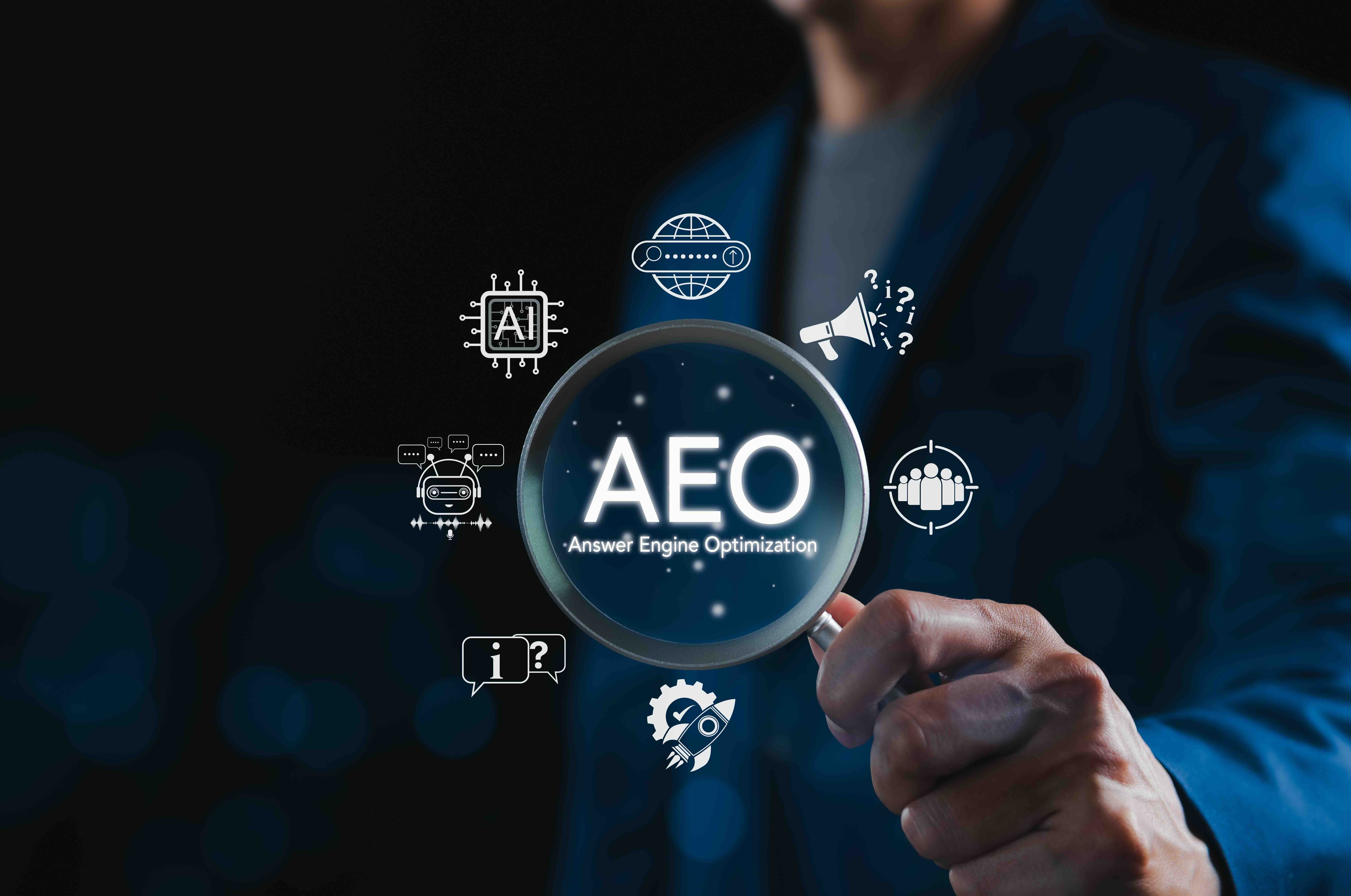
AEO is a discipline within search optimization focused on structuring your content so that AI-driven answer engines, voice assistants, and large language models can extract, interpret, and surface your information directly in response to user queries. Where traditional SEO chases rankings on a search engine results page, AEO targets position zero, featured snippets, knowledge panels, and the generative AI summaries now appearing across Google, Bing Copilot, Perplexity, and ChatGPT search. For ecommerce brands, this is significant. When a shopper asks "what is the best wireless headset under two hundred dollars," they are not always clicking ten blue links anymore. They are reading a synthesized answer, and if your product content is not structured to be cited in that answer, you are invisible before the consideration phase even begins.
How AEO Works in an Ecommerce Context
At the technical level, AEO for ecommerce hinges on three interconnected systems: structured data markup, content architecture, and entity-based relevance. Structured data, specifically schema.org markup like Product, Review, Offer, FAQPage, and BreadcrumbList, tells search engines and AI crawlers what your content means, not just what it says. That semantic layer is what enables an answer engine to pull your product details into a rich result or a conversational AI response. Content architecture matters just as much. Product descriptions, category pages, and blog content all need to be written in a question-and-answer format, with direct declarative sentences that give AI systems something clean and citable to work with. Entity-based relevance, meaning how clearly your brand, products, and categories are mapped to recognized concepts in a knowledge graph, determines whether you are trusted enough to be cited at all. When all three of these systems align, your ecommerce content becomes machine-readable in the way that answer engines actually reward.
Key Advantages of AEO for Ecommerce Brands
The business case for AEO in ecommerce is growing stronger with every algorithm update. Here is what a well-executed AEO strategy can deliver for your brand:
- Increased visibility in AI-generated search summaries without requiring the top organic ranking
- Higher qualified traffic, since users who find you through direct answers are already deep in the intent funnel
- Stronger brand authority, because being cited by an AI answer engine carries implicit credibility
- Improved conversion rates tied to better-matched user intent at the point of discovery
- Reduced dependency on paid search for high-funnel product awareness queries
- Competitive differentiation in product categories where most competitors have not yet adopted AEO practices
This last point is particularly worth noting in 2026. The ecommerce brands investing in AEO now are building a structural advantage that will compound over time. The window to get ahead of the curve is still open, but it is narrowing.
The Role of Structured Data and Schema Markup in Ecommerce AEO
If there is one technical pillar that ecommerce teams need to prioritize immediately, it is schema markup. Product schema, in particular, enables answer engines to understand price points, availability, ratings, shipping details, and product variants without parsing unstructured HTML. FAQPage schema converts your support content and product Q-and-A sections into direct candidates for featured snippet and AI summary inclusion. Review schema aggregates your social proof in a format that answer engines can contextualize and surface. BreadcrumbList schema reinforces your site's categorical hierarchy, which helps large language models understand where a given product lives within your catalog's taxonomy. Implementing these schema types correctly, validating them through Google's Rich Results Test and Schema Markup Validator, and maintaining them as your catalog evolves is not optional if AEO is a priority. It is the foundation everything else sits on.
Content Strategy Adjustments That Support AEO for Ecommerce
AEO demands a different kind of content thinking than what most ecommerce teams are used to. Traditional product copy is written to convert. AEO-optimized content has to serve two masters: the human shopper and the AI system processing the page. That means leading with direct answers, avoiding vague marketing language in places where specificity matters, and structuring long-form content like buying guides and comparison pages with clearly labeled sections that answer discrete questions. Your FAQ content deserves particular attention. FAQs are among the highest-performing content formats for AEO because they mirror the exact question-and-answer format that AI answer engines are designed to extract. Every major product category page should have an FAQ block. Every product page with meaningful complexity should have one too. Think of your FAQ content less as a customer service tool and more as a direct feed into the answer engine ecosystem.
Common Drawbacks and Limitations to Be Aware Of
AEO is not without its complications, and it is worth going in with realistic expectations. The most significant challenge is attribution. When a shopper discovers your brand through an AI-generated summary and then searches your brand name directly, that conversion often gets attributed to branded search rather than to the AEO content that drove awareness. This makes measuring AEO ROI harder than measuring a paid search campaign, and it requires a more sophisticated analytics approach that tracks assisted conversions and brand search lift over time. Another limitation is the lack of direct control. You cannot force an AI answer engine to cite your content the way you can target a keyword with an ad. You can create the conditions for citation, but the algorithm makes the final call. There is also the risk of over-optimization, where content is written so formulaically for machines that it loses the persuasive quality that converts human shoppers. Balance is everything here. Finally, the AEO landscape is still maturing. Platform behaviors across Google AI Overviews, Perplexity, and ChatGPT search are not fully standardized, which means your strategy may need to adapt as these systems evolve through 2026 and beyond.
Practical Steps to Start Implementing AEO for Your Ecommerce Store
Getting started with AEO does not require a full site overhaul. A focused, phased approach works well for most ecommerce businesses. Begin with a structured data audit to identify which pages are missing schema markup and which are implemented incorrectly. Then prioritize your highest-traffic product and category pages for FAQPage and Product schema implementation. At the content level, audit your top-performing product pages for answer density, which is a measure of how many direct, question-answering statements appear per page. Optimize those pages to increase answer density without sacrificing conversion copy. Build out or expand your buying guide content with clearly labeled H2 and H3 headers that map to real user questions. Set up monitoring for AI Overview appearances in Google Search Console and track branded search volume as a proxy signal for AEO-driven awareness. This is a program, not a one-time project, and treating it that way from the start will serve you well.
AEO and the Broader Ecommerce Marketing Ecosystem
AEO does not operate in isolation. It works best when it is integrated with your broader ecommerce growth strategy. Paid search and AEO are actually complementary: paid campaigns drive immediate transactional traffic while AEO builds organic authority and awareness at the top of the funnel. Email marketing, social proof, and content marketing all contribute to the entity authority that answer engines use to evaluate your brand's credibility. Conversion rate optimization ensures that the traffic AEO does drive actually converts at a respectable rate. The agencies and in-house teams seeing the strongest results in 2026 are the ones treating AEO not as a standalone SEO tactic but as a core layer of their digital marketing infrastructure. When your paid, organic, and content channels are all pulling in the same direction, AEO amplifies all of them.
Why Kreativa Group Is the Right Partner for Your Ecommerce AEO Strategy
Ecommerce AEO is technical, strategic, and highly execution-dependent. Getting it right requires both the analytical rigor to implement structured data correctly and the creative intelligence to produce content that works for humans and machines simultaneously. That is where Kreativa Group, a full-service marketing and creative agency based in Los Angeles and Miami, brings something genuinely different to the table. The leadership team has managed paid media for multi-billion dollar brands like Newegg, Rakuten, and Fossil Group, and has designed digital experiences for global names like Sandals Resorts, Porsche, Audi, and BMW. They have also done the startup thing, successfully exiting companies like Misfit Wearables and HomeLister, which means they understand how to build growth systems that scale from the ground up. To date, Kreativa Group has driven over two hundred million dollars in incremental revenue, averaged over seven times ROAS and a four percent conversion rate, and launched more than two dozen websites across Shopify, Webflow, and WordPress. They are among the top one percent of US-based agencies holding simultaneous Google Ads, Amazon Ads, Shopify, and Webflow partner certifications. The focus is always on business outcomes, not vanity metrics, which is exactly the mindset an AEO engagement requires. If you are ready to understand where your ecommerce brand stands and what is possible, request a free ecommerce growth audit from Kreativa Group and get a clear picture of the opportunity in front of you.
Frequently Asked Questions About AEO for Ecommerce
What does AEO stand for and what does it mean for ecommerce?
AEO stands for Answer Engine Optimization. For ecommerce, it refers to the practice of structuring product content, schema markup, and on-site information so that AI-driven answer engines and search platforms can extract and surface your content in direct response to user queries, often before a user ever clicks through to your site.
How is AEO different from SEO for ecommerce websites?
Traditional SEO focuses on ranking within a search engine results page. AEO focuses on being the source that answer engines cite in featured snippets, AI-generated summaries, and voice responses. SEO drives clicks to your site; AEO can drive brand visibility and intent before a click even happens.
Which schema markup types matter most for ecommerce AEO?
The most important schema types for ecommerce AEO are Product, Offer, Review, AggregateRating, FAQPage, and BreadcrumbList. These tell answer engines what your products are, what they cost, how they are rated, and where they fit within your site's structure.
Can AEO replace paid search advertising for ecommerce brands?
No, AEO is not a replacement for paid search. It functions best as a complementary channel that builds brand authority and organic visibility at the top of the funnel, while paid search handles immediate transactional demand. The two strategies work better together than either does alone.
How long does it take to see results from an AEO strategy in ecommerce?
AEO is a medium-to-long-term investment. Structural improvements like schema implementation can show measurable results within weeks in some cases, but meaningful impact on brand search lift and AI citation frequency typically takes three to six months of consistent execution.
Does AEO work for small ecommerce brands or just enterprise retailers?
AEO is accessible to ecommerce brands of any size. In fact, smaller brands in niche product categories often find it easier to achieve citation in AI summaries because the competitive content landscape is thinner. A focused strategy with strong structured data and high-quality FAQ content can yield meaningful results without an enterprise budget.
How do I know if my ecommerce site is being cited by AI answer engines?
Monitoring AI Overview appearances in Google Search Console is a starting point. You can also conduct manual searches for your key product queries in platforms like Google, Perplexity, and Bing Copilot to see whether your content is being surfaced. Tracking branded search volume over time is another useful proxy signal for AEO-driven awareness.
What types of ecommerce content perform best for AEO?
FAQ content, product comparison guides, buying guides, and category-level explainer pages consistently perform well for AEO. These formats are structured in a question-and-answer pattern that AI systems are specifically designed to extract and synthesize for users.
Is AEO relevant for voice search in ecommerce?
Yes. Voice search queries are inherently conversational and question-based, which maps directly to the content formats that AEO optimizes for. If your product content answers specific questions clearly and concisely, it is better positioned to be pulled into voice search responses delivered through smart assistants.
What is the biggest mistake ecommerce brands make with AEO implementation?
The most common mistake is treating AEO as a purely technical exercise and neglecting the content quality layer. Implementing schema markup without simultaneously improving the clarity, specificity, and answer density of your on-page content limits the effectiveness of your entire AEO strategy. Both dimensions have to move together.